Who Wrote the Book of Life?

© Wendy Anne Clark, 2025

The Bible uses many things in the physical world to help us understand things in the spiritual world. For example, the Apostle Paul tells us that Creation reveals things to us about God’s eternal power and divine nature (Romans 1:20). We can observe nature in the physical world and learn something about God and the unseen spiritual world.

God as Father and Jesus as the Son, gives us an insight into the relationship between God the Father and Jesus. It’s not the exact relationship; the Father didn’t get married and bear a child–not in the physical sense. But there is something about a father-son relationship, especially a healthy one, that can help us to understand God as Father and Jesus as Son. They have different roles and are not exactly the same in what they do even as they are the same in nature and character. The Father is holy. The Son also is holy. The Father is trustworthy. The Son also is trustworthy. All of the qualities of the Father also refer to the Son and to the Spirit.

Jesus submits to the will of the Father. “For I have come down from heaven, not to do my own will but the will of Him who sent me” (John 6:38). This is an eternal relationship and not anything new. It has always been (I Corinthians 14:24-28). The problem that we, as human beings, often have is that we do not rightly understand submission. We think of it as making one party lesser or of less significance than the other. But this is a distortion of what God demonstrates to us about submission.

A Bible teacher was once asked, “Is Jesus equal to the Father?” His answer was, “Almost.” Hmmm. While I think I understand where he was going, I don’t agree. Jesus is equal to the Father. They share the same nature and attributes, and yet Jesus willingly submits His will to the Father–His human will. As God, He always shared the Father’s plans and purposes and will.

Jesus also says that the Father gave Him all authority. How is it that the authority had to be given to Him? I’m not sure, but Jesus says that it was. Jesus has all authority even as He submits to the Father. I’m not sure that we can fully wrap our human minds around this relationship, but our human relationships are supposed to help us. I’m sure that is why the enemy is constantly distorting and corrupting our human relationships, to make it harder for us to understand how the Father, Son, and Spirit relate to each other.

The Son willingly submits to the will of the Father and is in agreement with the Father. He speaks only what the Father gives Him to speak (John 12:49). The Spirit willingly submits to the Son and reminds us of the things the Son taught (John 14:26). The Father, Son, and Spirit work in agreement with each other. There is no disagreement, disunity, or rebellion–not ever. Jesus prays that we might have this same kind of unity in the Body of Christ with agreement and willing submission and cooperation. In our case, sin becomes a very real barrier to overcome. There is no sin or selfishness or rebellion within the heart of God.

Marriage of a man and a woman demonstrates something to us of Jesus as a bridegroom and the Church as His bride. Jesus is described as a bridegroom, preparing a place for His bride. When the place is ready, He will return for His bride, and there will be a wedding feast, a celebration. We are meant to attend our wedding celebrations and think of what is planned for the future of all those who are in Christ Jesus. We are meant to watch a loving groom, who is excited for his bride, who is waiting for her and preparing for her, and we are reminded to think of Jesus in this same way, excited for us, waiting for us, preparing for us, and coming back for us.

Will there be an actual feast where we all sit down at a gigantic table and share a meal together? Jesus seems to refer to this at what we call “the Last Supper” when He says, “I tell you I will not drink again of this fruit of the vine until that day when I drink it new with you in my Father’s kingdom” (Matthew 26:29). I imagine a real feast, a real celebration. Think of the most amazing feast that you have ever attended. Something far better is being prepared for us. With all the time to prepare, I anticipate something too amazing to describe.

What then of the Book of Life? Is this an actual physical book, sitting up on a podium somewhere? Are there physical pages to be turned and consulted?

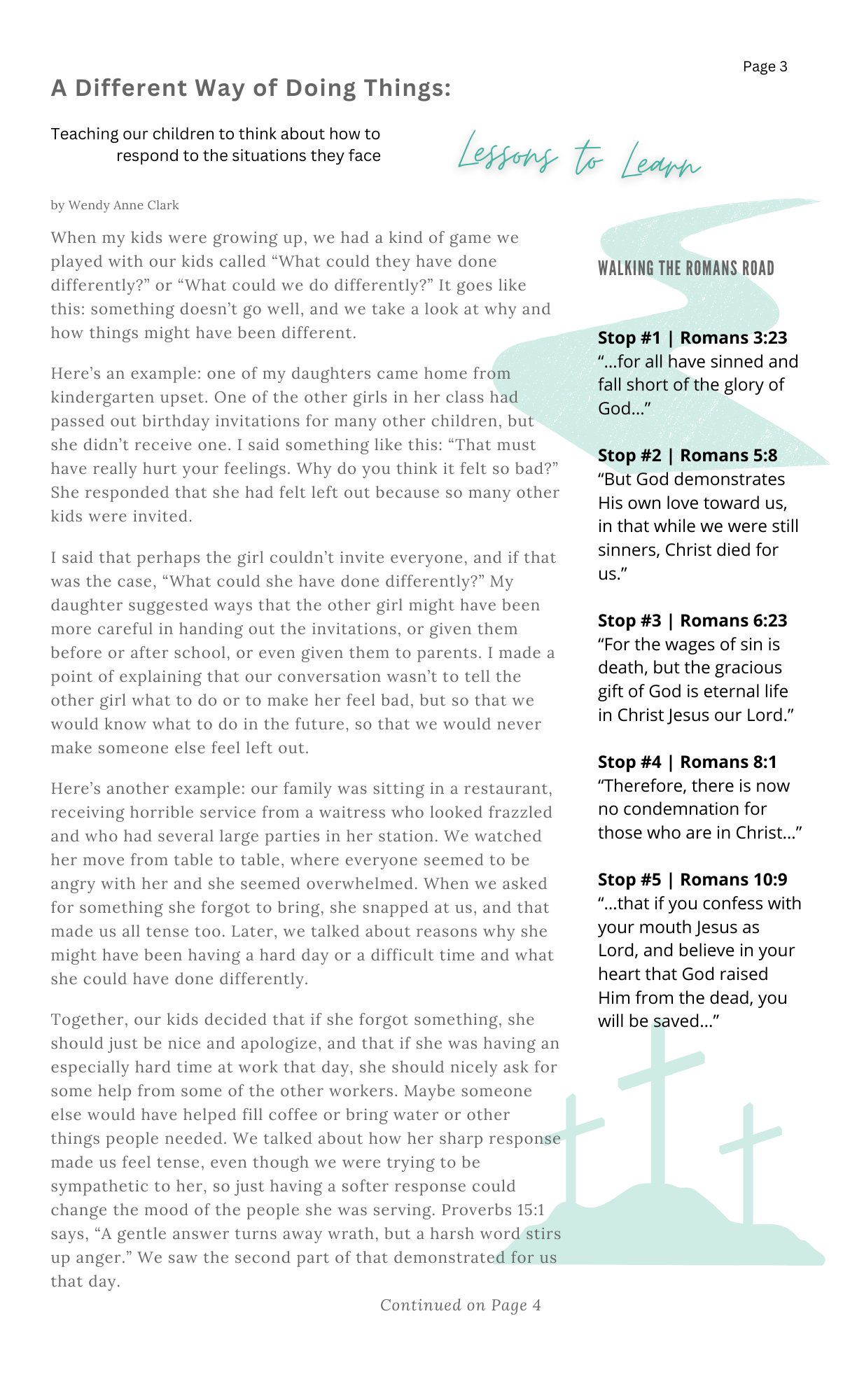
Chad Bird (pastor, professor, scholar) poses an interesting perspective on the Book of Life in his article “How Do I Know My Name is Written in the Book of Life?” He writes, “This book is not a dusty volume laid to rest and forgotten, but a flesh-and-blood testament of the power of an indestructible life, raised for you . . . . Christ Jesus is the Book of Life. In him and him alone our names are written.”

Interesting. 

I have never stopped to think about whether the book is an actual book or just meant to point us to something else. Of course, I have considered the significance of the Book of Life, but I like the idea of looking at the book and seeing a person.

Consider this: Jesus is the Word of God, the logos, spoken in the beginning. He was both with God, and He was God (John 1). Those whose names are written in the Book of Life were written there from the creation of the world (Revelation 17:8). In Ephesians, the Apostle Paul tells us that everyone who is “in Christ” was chosen before the foundation of the world to be adopted as God’s children (Ephesians 1:3-6). God has engraved the names of His people on the palms of His hands (Isaiah 49:16). Is this a reference to the crucifixion and all who would be in Christ? Are those names, written in the Book of Life, also engraved on the palms of the hands of Jesus?

It is in Christ and through His shed blood on the cross for our sins and our repentance and submission to His sacrifice on our behalf, that our names are written in that book, “The Lamb’s Book of Life” (Revelation 21:23-27). The Lamb’s Book contains the names of those who are saved by the Lamb.

So then, is the book an actual book, sitting up on a celestial podium in the spiritual realm? Maybe. It’s quite possible that there will be an actual book that is referenced. It’s also possible that it is simply an image for us to understand the nature of our salvation. It is written down, recorded. It is written in ink and will not be blotted out. It is personal–my name is there–in the book and on the hands of Jesus. My name. Me. It is not a collective recording of the Church as a whole, but of each person who is in Christ Jesus.

And God has known all along that I would respond to the Gospel, run to Jesus, and be saved, and God has determined long ago many things that will be mine because my name is written in the Lamb’s Book of Life.

And if you are in Christ Jesus and have turned to Him as Savior and Lord, your name is written there too.
Don’t Lose Heart

© Wendy Clark, 2025

The closest I have ever come to being persecuted for my faith was a teacher making me feel uncomfortable for my views on the value of life, a professor warning me to not “take the Bible too seriously,” a classmate rolling his eyes at me over something I said I believe. None of these things are real persecution.

I have experienced being mocked for being “good” or for doing good or for trying to help someone. In seeking to serve others, I’ve been accused of not helping “the right way” or “enough” or of helping the “wrong” person or people. I’ve been told that by helping I am the one responsible for the bad actions of another person.

All of these things can be discouraging, but if you are being obedient to God’s commands and are serving the broken and hurting around you, don’t be discouraged when doing so becomes difficult. Serving broken people is not easy, and it is often a thankless job. Sometimes the people that you reach out to help will turn on you, become angry, maybe even lie about you. They may be manipulative or harsh in their criticism of you. 

Serve others anyway.

If you live for rewards in this life, you will give up when the person you step out to care for is thankless, selfish, spiteful. But if you can remember that none of what you do is about you, that the goal goes far beyond the here and now, you will be able to stand even in the midst of lies or hurtful accusations.

So many things that others say and do can feel personal, and though words and actions might be directed at you, they often aren’t even about you. So while you should assess your part in any conflict you have with others, don’t take on the responsibility that belongs to someone else. Don’t consider yourself guilty just because a broken person says that you are. Remember that broken people say and do broken things, and that very often they aren’t ready to take responsibility for their own feelings and words and actions.

It’s easier to help people who are physically, financially, socially, mentally, emotionally, and spiritually healthy. But have you noticed that those aren’t the people who really need help? The people who need help have problems, real problems. Their problems aren’t easily solved, often have a long history, and usually run deep. They have problems because they don’t have it all together. 

And their problems might be their “fault.” They haven’t done the kinds of things that result in physical, financial, social, mental, emotional, and spiritual health. They might not “deserve” help. But they are often desperate for help. They are often stuck, and without help, they won’t be able to move forward. And sadly, often with help, they won’t take the steps that they need to take to move forward.

Be willing to help anyway.

Pay attention, and don’t fall into doing more than the person you are trying to help is willing to do. Reach out your hand, but wait for the other person to grab onto it. If a person is stuck in a pit, don’t jump down in it and try to comfort the person there. The goal is to encourage and draw the person to climb out of the pit and to help the person on that upward climb. 

All of this must be done with fervent and consistent prayer. God knows what the broken person needs. You see only a tiny bit of what is going on, so pray for wisdom all along the way.

And when you are investing time and energy in a person and that person decides to go in an unexpected direction, don’t let the disappointment or even the sense of betrayal you might feel keep you from doing what God has called you to do and being who God has called you to be. Serve others even when it seems a thankless task. Serve others because you serve the Lord Jesus Christ who gave Himself up for you, and know that He promises that there are rewards for you in Eternity. Eternal rewards.

Always keep Eternity in mind. Know that the only real hope you have to offer someone is the Gospel of Jesus Christ–the very good news that through the sacrifice of Jesus on the cross for our sins, we can be reconciled to God. The Holy Spirit will come into our lives and begin to transform the way we think, the way we see the world. Over time, our desires will change, and if we give attention to the Word of God, we will become more like Jesus and more aligned with God’s plans, and God’s purposes, and God’s ways. Through the power of the Holy Spirit, people really do change.

So don’t lose heart. Don’t give up. Don’t stop praying, and don’t stop loving and serving. Remain steadfast and faithful, knowing that it’s always worth it to do the will of a good, gracious, generous, and loving God. 

“And let us not grow weary of doing good, for in due season we will reap, if we do not give up. So then, as we have opportunity, let us do good to everyone, and especially to those who are of the household of faith” (Galatians 6:9-10).

“Such is the confidence that we have through Christ toward God. Not that we are sufficient in ourselves to claim anything as coming from us, but our sufficiency is from God, who has made us sufficient to be ministers of a new covenant, not of the letter but of the Spirit. For the letter kills, but the Spirit gives life (2 Corinthians 3:4-6). Therefore, having this ministry by the mercy of God, we do not lose heart” (2 Corinthians 4:1).

In the Presence of the King

© Wendy Clark, 2025

Brother Lawrence, in his book The Practice of the Presence of God (p 55), writes something along these lines:

What would it be like for the greatest criminal in the world to dine at the king’s table and be served by him, knowing what he had done to break the king’s laws, but not assured of the king’s pardon? Wouldn’t he feel great uneasiness, great fear and trepidation? He would, of course, unless he knew the great goodness and faithfulness of the king and knew indeed that his debt had already been paid, and his pardon was already accomplished.

This is how we, who have been saved by the blood of Jesus, shed in our place, for our sins, sit at the table of the Lord and celebrate in His presence. The more aware we are of our great debt, the more we rejoice in our great and guaranteed pardon. We do not tremble in the presence of One so holy and great–only because we have experienced His amazing grace and mercy.

Hebrews 10:19-23

“Therefore, brothers, since we have confidence to enter the holy places by the blood of Jesus, by the new and living way that He opened for us through the curtain, that is, through His flesh, and since we have a great priest over the house of God, let us draw near with a true heart in full assurance of faith, with our hearts sprinkled clean from an evil conscience and our bodies washed with pure water. Let us hold fast the confession of our hope without wavering, for He who promised is faithful.”

The Throne and the Cross

© Wendy Anne Clark, 2024

I remember a diagram we used to use with those surrendering to Jesus. It was a picture of a throne. “Who’s on the throne of your life?” we’d ask. The diagram, though useful in its way, barely scratches the surface of a deep and important part of the Christian life–surrender. 

A.W. Tozer writes, “In every Christian heart there is a cross and a throne, and the Christian is on the throne ‘till he puts himself on the cross . . . “

We can draw the diagram and ask the question, ”Who’s on the throne of your life?” but it will take more than a few minutes to grasp the fulness of what the means or of what it means to truly surrender and let Christ rule. It will take some effort for us to understand how allowing Christ to sit on the throne of our lives will require that we take our own desires to the cross to die.

How do I take myself to the cross and die to myself so that I might live for Jesus? The short answer is “through confession and repentance,” but it will take much more time, thought, reflection, experience, and diving into Scripture to grasp the concept of confession and repentance and to move to the place of surrender.

While there may be some things that we quickly recognize as sin and confess and repent of, and come to surrender quickly, more often that surrender takes time. It occurs as a long process of self-reflection and examination, of acknowledgement and understanding, of confession–agreeing with God about our sin, and choosing to turn away from it–repentance. And sometimes we will find ourselves cycling back around again before we reach the place of complete surrender. Perseverance is required.

When we are surrounded by others, even others who call themselves Christians, who accept sin as “normal” or “natural,” which is often the case, the walk to the cross will be much slower, much more encumbered. We may have to drag ourselves to that cross, and we might not get a lot of support on the journey. We may not be celebrated by others when we finally get where we needed to be all along.

Sometimes we see and acknowledge parts of our sin and not the whole. Sometimes the Holy Spirit’s work is like surgery. It requires discovery of the problem, recognition that a drastic move is needed, surrender to the process, and then healing and recovery from the changes and maybe even loss that come with surrender.

The process of dying to self is not easy, and can be painful and even scary. Pulling self off the throne and yielding the seat to God is not a simple task. What the diagram of the throne fails to show us is that we often hang onto that throne with everything we have, and convincing ourselves to align with what God says is good and right and true might be the hardest part.

Through His physical death on the cross, Jesus shows us what dying to self in the spiritual realm will look like; we get a glimpse of it–and it is tortuous and bloody, messy and painful. Why do we expect that taking ourselves to the cross and allowing Jesus to rule over us will be comfortable or easy or without opposition? Are we paying attention? Have we noticed that so many give up and give in so easily, living a natural life, rather than a supernatural one?

The Apostle Paul writes to the Galatian church, “I have been crucified with Christ. It is no longer I who live, but Christ who lives in me. And the life I now live in the flesh I live by faith in the Son of God, who loved me and gave himself for me” (Galatians 2:20, ESV).

It is no longer I who live.

Of this A.W. Tozer writes, “It will require a determined heart and more than a little courage to wrench ourselves loose from the grip of our times and return to biblical ways, but it can be done.”

It can be done.

But it will require . . . determination and perseverance and seeking the truth, and honest self examination and confession and repentance and . . . surrender. 

(Tozer, A. W., From the Grave: A 40-day Lent Devotional, Moody Publishers, 2017.)

(background image: <a href=”https://www.vecteezy.com/free-photos/christian-cross”>Christian Cross Stock photos by Vecteezy</a>)

True Love

© Wendy Anne Clark, 2023

“Love is patient and kind. Love is not jealous or boastful or proud or rude. It does not demand its own way. It is not irritable, and it keeps no record of being wronged. It does not rejoice about injustice but rejoices whenever the truth wins out. Love never gives up, never loses faith, is always hopeful, and endures through every circumstance.”  –1 Corinthians 13:4-7, NLT

The world around us has its own definition of love, an ever-changing definition of love. But God tells us what true love is like, and His definition stands firm through the ages, no matter how people change. 

C. S. Lewis understood that what is ultimately for a person’s good is more loving than the things we do to give into a feeling in the moment. God’s love for us is also connected to our ultimate good and not necessarily to the things we desire for ourselves.

In his letter to the Romans Paul writes that “all things work together for good for those who love God and are called according to His purpose” (vs. 28). If we keep reading, we discover that the “good” that Paul is writing about is that we would be conformed to the image of Jesus.

Transformation–the kind that will require us to die to self and allow the Holy Spirit to shape us. This shaping will no doubt require some hard things, some painful experiences, some suffering. It might not always feel like “love” to us. It might not always feel like it’s working for our “good.” We can resist if we want to, but how we respond today is shaping us into who we will be tomorrow.

Come, LORD Jesus!

© Wendy Clark, 2023

I’m reading through and studying the book of Revelation right now. I’m nearing the end. Have you read Revelation? It is a book in the Bible that has a promised blessing for those who will read it aloud.
(Revelation 1:3). This is the first time in reading it for me that the vision of the Apostle John seems not so much of a mystery. It seems so clear, even obvious.

I still have questions about parts of it, of course; some things are weird. But the justice of God and the finality of God’s justice makes so much sense. It just HAS TO BE. There is no way around it. And there is great comfort in knowing that it one day will be. No one escapes.

There have been other times in history when Believers read John’s revelation and felt certain they were near the end–there were so many signs:  evil was so obvious, self-interest so prevalent, the abuse of power, the oppression of people, so out in the open, with so many willingly participating and cooperating.

The rise of Nazi Germany was one of these times in history, but only one. Hitler, Satlin, Pol Pot–as evil and murderous and anti-God as they were, they will not compare to the  man who will rise to world power in the end. But every murderous tyrant throughout history has demonstrated for us why the system of evil, the world as we know it, must one day come to an end, a complete and utter end.

I watched the movie Priceless the other day, a movie based on true stories of human sex trafficking. I’ve been watching interviews about the movie The Sound of Freedom, which is also about true stories of human sex trafficking, focused on the selling of young children. More importantly, it is the story of the people who fight against this evil. 

I haven’t seen the movie yet, but those who have, say it is a good movie about a deeply dark subject. Tim Ballard, a former government agent whose story is being told in the film, talked in an interview with Jordan Peterson about the unbelievable, inconceivable nature of the evil he has encountered. We can’t fathom how deep and dark is the pit of human depravity, the things that we can be led to find attractive and appealing and to justify as acceptable and right by our own standards.

What is the sickest, darkest, most horrendous thing that you can imagine giving you pleasure? According to Ballard, your imagination can’t come even close to the horrible things that people find pleasure in. 

Jordan Peterson talked about how getting from where you likely are in your thinking and imagination right now to where deep, abased, depravity resides requires millions of decisions, searing your conscience over and over and over again, over time molding and shaping your heart to a place where it delights in depravity. It dwells there.

James, the brother of Jesus, writes about the progression of sin in this way:

“Let no one say when he is tempted, ‘I am being tempted by God,’ for God cannot be tempted with evil, and He Himself tempts no one. But each person is tempted when he is lured and enticed by his own desire. Then desire when it has conceived gives birth to sin, and sin when it is fully grown brings forth death.” (James 1:13-16, ESV)

Our own desires lure and entice us, and we must decide how we will respond to them. Will we reject them? Flee from them? If we lean into those desires, they will take root, grow, and give birth to sin in us. That sin, if we continue to nurse it and then feed it solid food, protect it, shelter it–it grows up. Fully grown sin brings death.

There’s a progression that must take place to create a Hitler, a Stalin, a Pol Pot, a child sex abuser. It’s a long, dark progression that takes place in a human heart, and it involves the step-by-step cooperation of the individual.

The book of Revelation shines a light on the complete depravity of the human heart apart from the redeeming and transforming presence of God. At the end of human history God will allow those who reject Him to live as they desire, fully, and without His restraining presence in the world, feeding all of their own unrestrained passions and desires, but not without consequences. The consequences are deeply embedded in the carrying out of the desires. They can’t be separated from each other

The deepest, darkest things going on now, bringing brought into the light of day for us to see will pale in comparison to the things that people will do to each other out of their own love of self and rejection of God in those final days.

How clear it will be who we are without God! How obvious it will be that we need the restraining power of the Holy Spirit in our lives to live and walk according to God’s ways. We will understand why our best life is always lived on God’s path, according to His plans and purposes.

John’s revelation shows us that humans will always serve a master. Will it be God, who is good and perfect, holy and just, compassionate, merciful, truthful, faithful, trustworthy, almighty, wise? Or will we serve the master who is evil, cruel, selfish, deceptive, divisive, destructive, foul, depraved, corrupting, decaying? Will we serve him to our own demise?

Moses stands before the people of God and explains a clear choice they have to make. Here is what God is offering you–but God’s offer is attached to obedience to Him. You must listen to Him, believe Him, follow Him, obey Him, submit yourself to God and God’s ways. Moses tells the people that this is the message to them from God:

“I call heaven and earth to witness against you today, that I have set before you life and death, blessing and curses. Therefore choose life, that you and your offspring may live, loving the Lord your God, obeying His voice and holding fast to Him, for He is your life and length of days, that you may dwell in the land that the Lord swore to your fathers, to Abraham, to Isaac, and to Jacob, to give them.” (Deuteronomy 30: 19-20, ESV)

Will you choose God? Make no mistake, there are consequences attached to your choice. Moses says that the consequences are life and death.

In Revelation we see the playing out of those who say a definitive “no” to God’s rule and reign in their hearts. They know that what they are seeing is the judgment of God, and still they refuse to worship Him and walk in His ways. They know by experience the emptiness and suffering associated with their own depravity, and still they choose their own depravity.

It is because of this deep depravity played out–human desires going to their necessary conclusion–that the final judgment of the LORD, though fierce and terrifying, will be celebrated and bring great joy for those who are safe in Christ Jesus. And so, after all of the horrifying things that the Apostle John saw and recorded, he ends his account this way:

“Come, LORD Jesus!”

May we stand with the Apostle John, saved by the blood of Jesus poured out for our sins on the cross, having chosen to follow God and to walk in His ways, and say with confidence and anticipation of great joy, “Come, LORD Jesus!”

Changed and Changing

I’m not the person I once was and not the person that I will one day be. And that’s very good news. 

Today, I have lived 59 years.That’s amazing to me and somewhat unbelievable. Wasn’t I in my twenties just moments ago? In truth I’ve been planting many seeds in my life in the past 30 years (and more). As I look back at the growth in my life in the past 30 years, what does the crop look like that I am harvesting now?

I’ve learned to love better, much better. I’m more patient in difficult circumstances and with difficult people. I’ve learned how to wait well, to wait on GOD as a loving Father and to be more compassionate with hurting people. I treat people more gently and with more kindness. 

I feel peaceful most of the time, no matter what manner of chaos is going on around me. I live with deep joy.

All of these things have grown in me, not because I am someone outstanding or amazing, but because over time I have learned to surrender to the prodding of the Holy Spirit in my life, day after day after day. I have come to understand the benefit of surrendering quickly and fully to the Holy Spirit, to not try to battle it out with the GOD of the universe. I have experienced His goodness and His grace, His great kindness and tender mercy.

I have responded to the hunger and thirst for the Word that the Holy Spirit has stirred in me, and it has continued to grow more deep and vast, and my view of Scripture has grown richer and more intense. It’s been opened up to me in a way that Wendy in her twenties only dreamed of. Consequently, I have grown consistent in seeking GOD through His Word and have gradually expanded my morning time with Him, wanting so much more.

I sense GOD’s presence so very close to me all throughout the day now, every day. If I feel fearful or anxious, my first and immediate response is to go to GOD as my loving Father in prayer and worship. He is my refuge. He comforts me, leads me, and holds me. He faithfully draws out all fear and worry. In His presence is perfect peace.

I knew GOD well when I was 39. I’d had babies and cancer and healing. I knew Him even better at 49.I’d had failures and successes and walked in more confidence and less fear.

At 59 I realize that I’ve only begun to know Him. In the past decade I’ve relied even more on my heavenly Father for strength, comfort, direction, and provision. With my family I uprooted my life, resettled in another state, changed careers, started a ministry, and left behind a wonderful life for an equally wonderful, entirely different one.  I’ve lost both of my parents and have celebrated the lives they lived serving Jesus. I’ve moved into a new season where my siblings and I are now in that “older” generation.

And throughout all of these changes, I’ve continued to grow in my knowledge and understanding of GOD. And He is wonderful. I suspect that throughout Eternity I will be learning, growing, and knowing more and that there will be no end to the expanding depth and richness of understanding about who GOD is and how deeply He loves me.

I’m not done growing and changing. New challenges have revealed new places in me in need of GOD’s tender transformation, and I am confident that He will continue to refine me as I continue to cooperate with all that He wants to do in my life. 

And whatever this next year holds for me, I know that GOD will be faithful to His promises. He will never leave me (Hebrews 13:15), He will supply everything that I need (Philippians 4:19), and He will work out all things for my good (Romans 8:28).

The last birthday of my fifties. The last year before turning 60. Ready.Set.Go!

Another Year, Already

© Wendy Clark, 2023

January 15

Tomorrow I will be 59. How is that possible? Wasn’t I just 29 a few days ago? How did the last 30 years go by so quickly and at the same time seem a lifetime ago? 

The incredible passage of time. When I was young, older people told me about it. Some warned, some lamented, some kindly informed. My mom mused, saying that she felt like she was “still twenty inside.” 

But I couldn’t understand. I couldn’t conceive of it. Difficult times seemed long. Time seemed slow. Looking back I realize that sense of time was a persuasive illusion. GOD, in His Word had told me otherwise:

“As for man, his days are like grass; he flourishes like a flower of the field; for the wind passes over it, and it is gone, and its place knows it no more” (Psalm 105:15-16).

I believed Him, but I didn’t quite understand how that could be. And then I began to see. 

The moments came, and the moments passed, and then they were so quickly gone. I learned that if I wanted to slow down the bullet train of time, zooming me through life, I should stop and savor. Others before me knew it. Walter Hagen wrote back in the 1960s, “Don’t hurry. Don’t worry. And be sure to smell the flowers along the way,” and people started saying, “Stop and smell the roses,” and as I started to sense the incredible passage of time, I did. I stopped.

I learned to enjoy the moment, to be present in it, to pause and make memories that I could carry with me in my mind into the future. To never miss the moment of now in favor of reaching for some moment in the future.

So I ask, “GOD, what do you want me to do today? I want to please You.” Sometimes the answer involves planning and preparation that will take me into tomorrow, next week, next year, but always the answer involves paying attention to the people around me and walking in wisdom here and now.

I’m convinced that it is by GOD’s design that I become increasingly aware of the incredible passage of time and the brevity of this life. Seasons come and seasons go. In some places they are more difficult to perceive (like when I was growing up in Southern California), but here in Idaho, it’s not easy to overlook the pile of snow that reaches almost up to my back window.

Experience has taught me that the snow will melt, spring will come, mild and green and blooming; summer will follow, bright and warm, with long, full days; autumn will usher in beautiful colors and milder temperatures, and the days will start to get shorter once again. And then–I will be looking out my back window at the snow, the pile lower or higher, and I will be another year older. 

A long yawn or an intense sneeze, and I might miss it. That’s how it feels at this time of my life.

Wendy at 29, pregnant with her first child, uncomfortable, but ready–she could not sense it, this incredible passage of time. She didn’t know.

I don’t have a sense of how much more time I have ahead of me. Do I have 30 more years? More? Less? A lot less? One of my grandfathers died in his early 60s, another in his 80s, one grandmother in her 70s, but another at 52; my mom lived to be almost 80, and my dad died at 90. 

How much time do I have?  It is not a question that I concern myself with much. The amount of time seems far less important than the choices I make in using it.

I see the incredible passage of time written on my face and in the faces of my husband and  grown children, and I’m sometimes puzzled by the changes that seem accelerated. At the same time, I recognize GOD’s gentle nudge. This world is not my home. Today is passing. I won’t waste it. 

And perhaps ironically, I feel great peace in knowing that this is true.

Christmas, the Beginning of a Bigger Story

© Wendy Clark, December 2022

Christmas is the celebration of the coming of the Christ, the Messiah, the Anointed One. No, “Christ” is not Jesus’ last name. It is who He is–Messiah, the promised Deliverer, and He comes anointed to accomplish a specific assignment.

Think back to Moses and how at his birth there was a fearful king who tried to kill all of the male babies of the Hebrew people. Moses was protected, and Moses would grow to be their deliverer, leading the people out of slavery after 400 years.

Jesus is born after 400 “years of silence.” God hadn’t given the people a new word, recorded and passed down, in all of that time. Don’t be confused and think that means that God withdrew and wasn’t present or paying attention or actively working in the world. Every detail surrounding the birth of Jesus seems to say otherwise and shows that God was waiting until a time that He, Himself had appointed (Mark 1:14-15). At the very least it was 400 years of purposeful silence.

In Jesus’ infancy, there is another evil king who begins killing Jewish baby boys, out of fear that a new king will be born in his own generation. Jesus is protected and grows to be the promised Deliverer, the Messiah, who will “save his people from their sins.” 

Just as Pharaoh in Egypt was right to be afraid of the birth of Moses, King Herod was right to be afraid of the birth of Jesus, not because his earthly throne was in immediate jeopardy, but because of the Kingdom of God that Jesus would ultimately usher in: a Kingdom of justice and wisdom and righteousness and holiness. Kings like Herod can never stand boldly in the presence of Holy God. None of us can. We all need Jesus to deliver us–to save us from our sins.

I recently listened to a professed “progressive Christian” pastor preach about how he rejects the teaching of the atoning sacrifice of Jesus on the cross. He sees that teaching as rising out of a violent and punitive culture and in no way related to our lives today. I say with confidence that, no matter what the young pastor claims, he is not a “Christian” at all because Christianity rests on the atoning sacrifice of Jesus. The whole of Scripture, from beginning to end, is wrapped around the atoning sacrifice of Jesus, the teaching that “without the shedding of blood, there is no forgiveness of sins” (Hebrews 9:22).

Can anyone read the letter to the Hebrews or the letter to Romans and not see that Jesus came to deliver us from our sins? If you aren’t sure of the answer to that question, then I encourage you to start reading both of these letters, in a clear, straightforward way. What is Paul saying? What is the writer of Hebrews saying (whether or not that is Paul)?
The young “progressive Christian” pastor finds the teaching of the blood sacrifice offensive, and he is not alone. The Apostle Paul tells us that many will stumble over the cross and the teaching that Jesus came to die for our sins in our place to be the atoning sacrifice that was required to pay the penalty for sin. 

“For Jews demand signs and Greeks seek wisdom, but we preach Christ crucified, a stumbling block to Jews and folly to Gentiles, but to those who are called, both Jews and Greeks, Christ  the power of God and the wisdom of God. For the foolishness of God is wiser than men, and the weakness of God is stronger than men” (I Corinthians 1: 22-25). We preach Christ crucified.

Read all of 1 Corinthians, and it is clear that one thing that the Apostle Paul wants us to understand is that there are teachers among us that aren’t teaching the truth of the Gospel.  Pay attention and be aware.

When talking to people about the Gospel and trying to determine where another person stands, I often ask this question: “Do you know Jesus as your Savior?” If the person says yes, then I ask this: “Can you describe or explain what that means to you?” Whatever the person says next is very helpful in bringing clarity and understanding to the conversation.

One time, a young man responded by saying that Jesus saved him from his depression and his fear and his anxiety and his loneliness . . .  and continued with a very long list that was lacking one specific and important word. Those of us sitting across the table from the young man looked at him and waited. One older gentleman prodded, “Brother?”

The young man then began in a kind of frantic way, “But I’m not a sinner. Jesus didn’t save me from sins. I don’t need saving from sins.” Then we knew where we were in the Gospel conversation. No spinning around trying to figure out how we weren’t communicating clearly. He didn’t believe that the Gospel is about salvation from sins, the blood atonement of Jesus’ sacrifice on the cross, which the Bible clearly teaches. And from that point we were able to come to clarity about how we consider the Bible to be an authority over us and our thoughts, feelings, and opinions, but this young man considers the Bible to be one voice among many voices and of less authority than his own thoughts, feelings, and opinions. The “progressive Christian” pastor that I referred to earlier also eventually came around to sharing that same perspective about the Bible.

Christmas has significance, but the birth of Jesus is the beginning of something that is completed at the cross and confirmed through the resurrection of Jesus from the dead. We aren’t celebrating the birth of a baby who was born a long time ago and grew to be a good and wise teacher and then died and was buried long ago, his body now decomposed as everyone who died before or since. What is the point of that? There are many people like that throughout history, and we haven’t established in their honor elaborate and extensive celebrations that occur all over the world with decorations and parties and music and gift giving and stories and movies . . .

So if we do nothing else during this Christmas celebrating season, let’s meditate on this from the Apostle Paul’s letter to the church at Philippi:

“Have this mind among yourselves, which is yours in Christ Jesus, who, though he was in the form of God, did not count equality with God a thing to be grasped, but emptied himself, by taking the form of a servant, being born in the likeness of men. And being found in human form, he humbled himself by becoming obedient to the point of death, even death on a cross. Therefore God has highly exalted him and bestowed on him the name that is above every name, so that at the name of Jesus every knee should bow, in heaven and on earth and under the earth, and every tongue confess that Jesus Christ is Lord, to the glory of God the Father.”(Philippians 2:5-11)

Let Christmas remind us that Jesus is still alive and is coming back, and we will all recognize who He really is. Let’s take seriously the Apostle Paul’s teaching that “today is the day of salvation” (2 Corinthians 6:2) and respond to God’s invitation to draw near to Him through Jesus–and His death for us in our place on the cross. This is the significance of the birth of Christ and the heart of what it means to be a “Christian,” a follower of Christ, the Messiah. All of what it means to be a Christian begins with this understanding.